

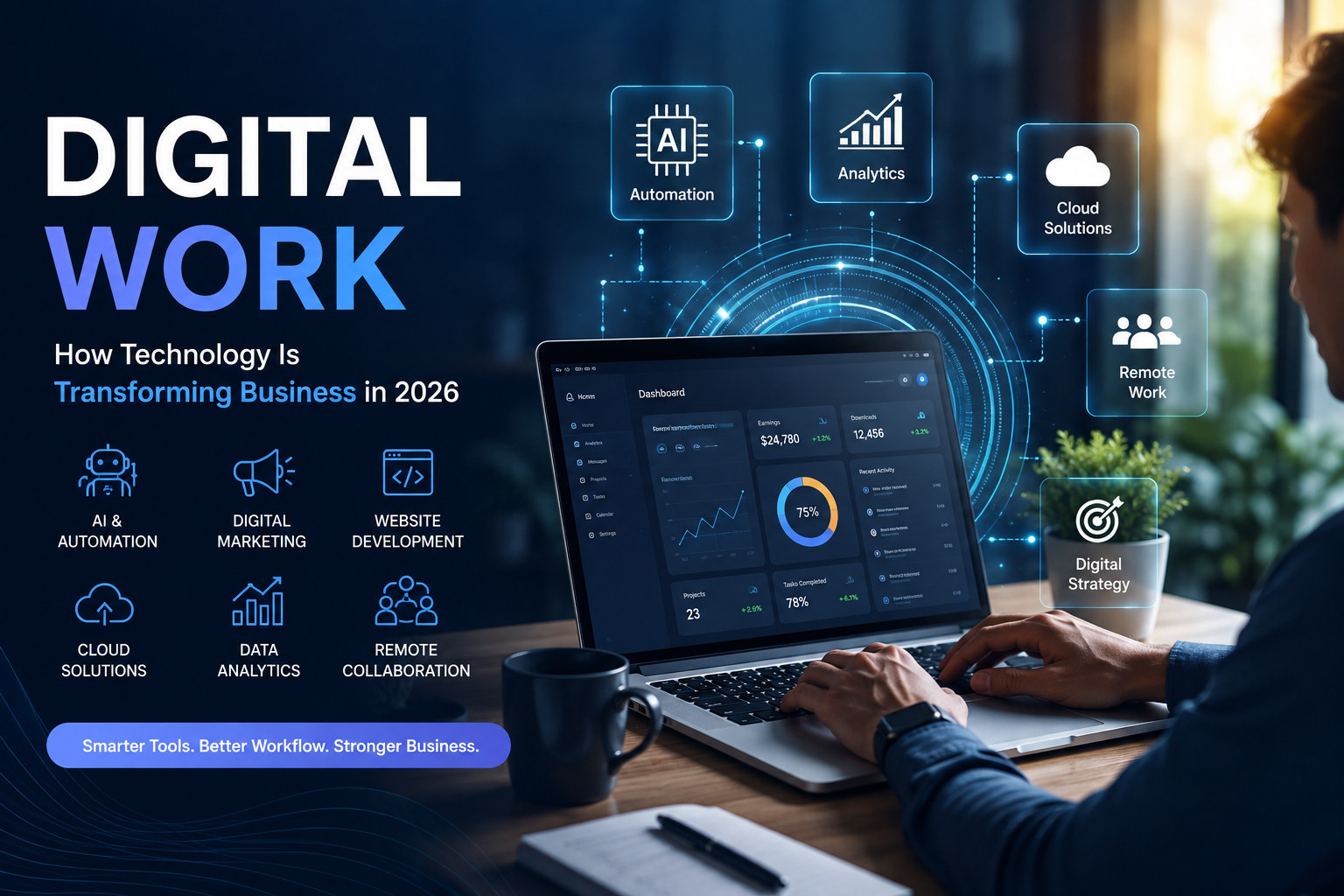
Digital work has become an essential part of modern business. Companies of all sizes are using digital tools, artificial intelligence, automation, cloud platforms, and online marketing to improve productivity and reach more customers.
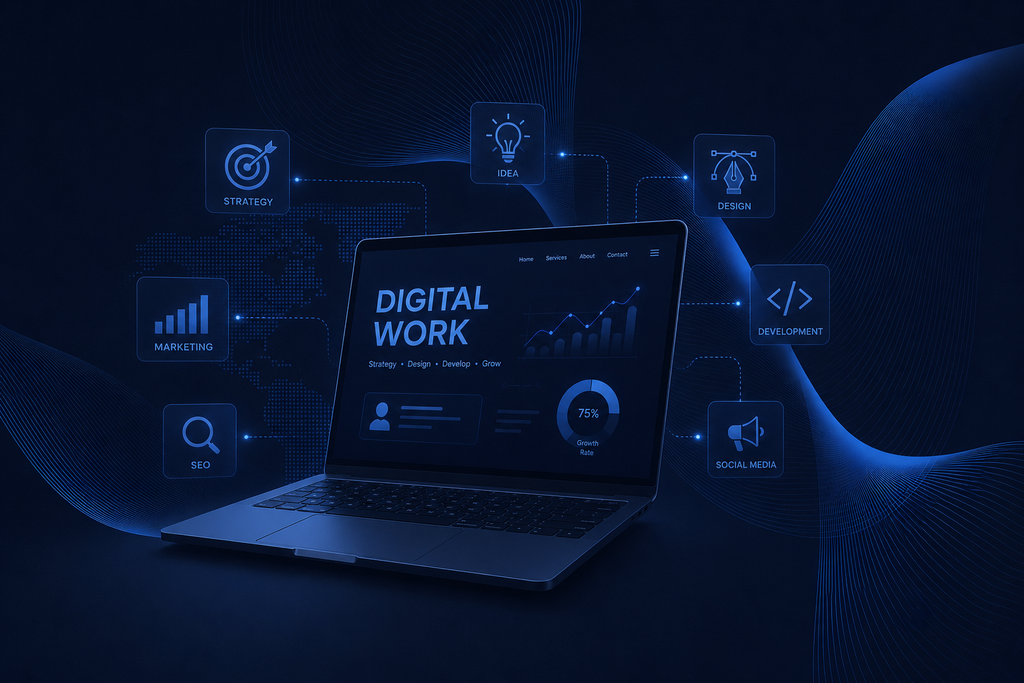
In 2026, digital work is no longer simply about working online. It is about using technology strategically to make business processes faster, smarter, and more efficient.
What Is Digital Work?
Digital work refers to tasks, processes, and business activities that are completed using digital technologies. It can include website development, search engine optimization (SEO), content creation, social media marketing, data management, customer support, artificial intelligence, and business automation.
With the right digital tools, businesses can reduce repetitive tasks, communicate more effectively, and provide better experiences to their customers.
Why Is Digital Work Important?
The growth of digital technology has changed how businesses operate. Customers now expect companies to have a strong online presence, fast websites, useful content, and convenient digital experiences.
Digital work helps businesses:
- Improve productivity
- Reduce repetitive manual tasks
- Reach customers online
- Improve communication
- Automate business processes
- Analyze business data
- Strengthen their online presence
- Increase customer engagement
- Support remote and flexible work
These benefits make digital work an important part of modern business growth.
How AI Is Changing Digital Work
Artificial intelligence is one of the biggest developments influencing digital work in 2026.
AI can help businesses analyze information, generate content, answer customer questions, automate repetitive processes, and provide useful insights. Businesses can use AI to support employees rather than replacing every human task.
For example, an AI-powered customer support system can handle common questions while employees focus on more complex customer needs.
AI can also help marketing teams understand customer behavior and create more personalized digital experiences.
The Role of Digital Marketing
Digital marketing is another major part of digital work. Businesses use search engines, social media, email marketing, websites, and online advertising to connect with their target audiences.
SEO is particularly important because a well-optimized website can attract people who are actively searching for a company’s products or services.
A strong digital marketing strategy can help businesses increase visibility, generate leads, and build long-term relationships with customers.
Automation Makes Digital Work More Efficient
Business automation allows companies to complete repetitive tasks with less manual effort.
For example, automation can be used for:
- Email responses
- Lead management
- Appointment reminders
- Data entry
- Marketing workflows
- Customer notifications
- Reporting
- Internal business processes
Automation saves time and allows employees to focus on tasks that require creativity, decision-making, and human interaction.
Websites Are at the Center of Digital Business
A professional website is one of the most important digital assets for a modern business.
Your website often creates the first impression of your company. A fast, mobile-friendly, secure, and easy-to-navigate website can help turn visitors into customers.
Modern websites can also integrate AI tools, chatbots, analytics, payment systems, automation, and marketing platforms to create a complete digital business environment.
Digital Work and Remote Collaboration
Digital work has also made collaboration easier. Teams can communicate and manage projects from different locations using cloud-based software, video conferencing, project management platforms, and online document systems.
This gives businesses greater flexibility and allows them to work with talented professionals regardless of their physical location.
How Businesses Can Improve Their Digital Work
Businesses that want to improve their digital operations should start with a clear strategy.
First, identify repetitive or inefficient processes. Then determine which digital tools can improve those processes.
Businesses should also focus on:
- Building a professional website
- Improving search engine visibility
- Using automation where appropriate
- Protecting business data
- Using analytics to make better decisions
- Creating valuable digital content
- Improving customer experience
- Adopting useful AI solutions
The goal should not be to use every new technology. Instead, businesses should choose technologies that solve real problems and create measurable value.
The Future of Digital Work
Digital work will continue to evolve as AI, automation, cloud computing, and other technologies become more advanced.
Businesses that embrace useful digital solutions can become more efficient and competitive. However, technology alone does not guarantee success. Businesses still need strong strategies, creative thinking, skilled people, and a clear understanding of their customers.
The future belongs to businesses that combine technology with human expertise.
Conclusion
Digital work is changing how businesses operate, market their services, communicate with customers, and achieve growth. From AI and automation to SEO and modern websites, digital technologies provide businesses with new opportunities to work smarter.
As technology continues to develop in 2026 and beyond, adopting the right digital tools and strategies can help businesses improve productivity, strengthen their online presence, and build sustainable growth.
For businesses looking to succeed in the modern digital environment, digital work is no longer optional—it is becoming a core part of how business gets done.
