

Web Development is an essential part of the modern digital world. Businesses, organizations, and individuals use websites to share information, promote services, sell products, communicate with customers, and build an online presence.
A professional website is more than just a collection of pages. It combines design, programming, content, performance, security, and user experience to provide visitors with a smooth digital experience.
Whether you are starting a small business website or building a large web application, understanding web development can help you make better decisions about your online presence.
What Is Web Development?
Web Development is the process of creating, building, maintaining, and improving websites and web applications.
It involves several technologies and processes, including:
- HTML
- CSS
- JavaScript
- Databases
- Server-side programming
- APIs
- Website security
- Performance optimization
- Content management systems
Web development generally consists of three major areas: frontend development, backend development, and full-stack development.
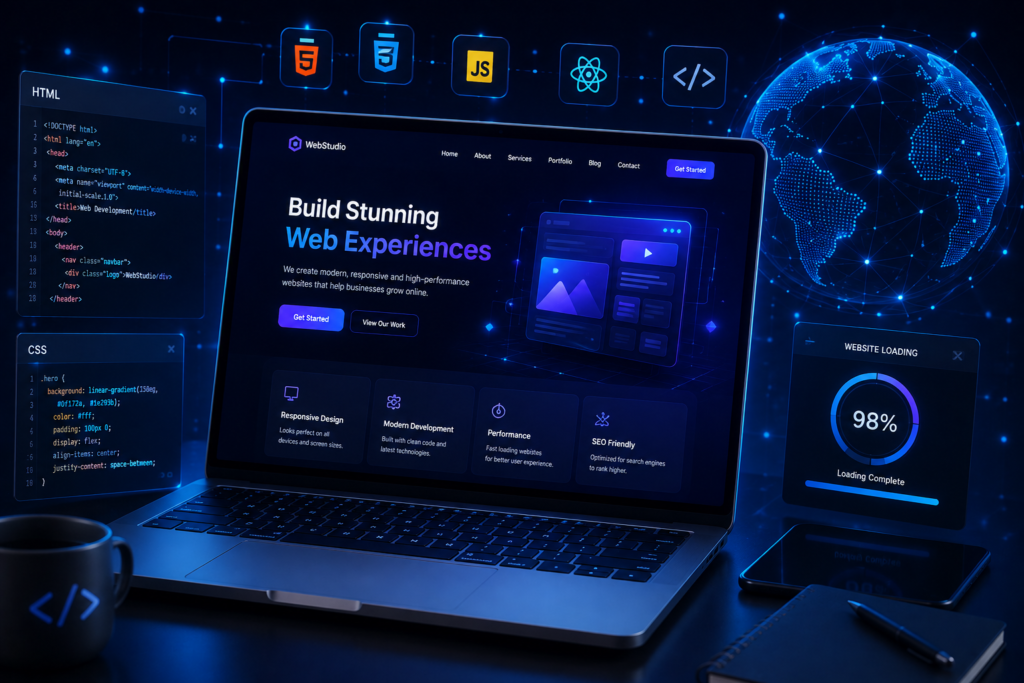
Types of Web Development
1. Frontend Development
Frontend development focuses on everything visitors see and interact with on a website.
Frontend developers commonly work with:
- HTML
- CSS
- JavaScript
- Responsive design
- User interfaces
- Website accessibility
A good frontend helps visitors navigate a website easily and provides a consistent experience across desktop, tablet, and mobile devices.
2. Backend Development
Backend development focuses on the technology working behind the website.
It can include:
- Servers
- Databases
- APIs
- Authentication
- Application logic
- Data processing
For example, when a customer submits a form on a website, the backend can process and store the submitted information.
3. Full-Stack Development
Full-stack development combines frontend and backend development.
A full-stack developer can work on both the visible website interface and the systems operating behind it.
This can be useful for businesses that need complete web applications and customized digital solutions.
Why Is Web Development Important for Businesses?
A website is often the first digital interaction customers have with a business.
Effective web development can help businesses create a professional online presence and provide visitors with useful information.
Professional Online Presence
A well-developed website can make a business appear more professional and trustworthy.
It can showcase:
- Products
- Services
- Company information
- Customer reviews
- Contact information
- Portfolio projects
Better User Experience
Visitors expect websites to be easy to use.
A properly developed website should have:
- Clear navigation
- Readable content
- Mobile-friendly layouts
- Fast loading pages
- Accessible interfaces
- Clear calls to action
Improved Website Performance
Website performance can influence user experience and conversions.
Developers can improve performance by optimizing images, reducing unnecessary code, using caching, and improving the way website resources are loaded.
Mobile Responsiveness
Most modern websites need to work properly across different screen sizes.
Responsive web development allows a website’s layout to adapt to smartphones, tablets, laptops, and desktop computers.
Web Development and SEO
Web development and SEO work closely together.
Search engines need to crawl and understand websites effectively. Developers can support SEO by creating clean website structures and ensuring important technical elements are properly implemented.
Important technical SEO considerations include:
- Page speed
- Mobile responsiveness
- Website structure
- Internal linking
- Clean URLs
- Image optimization
- Structured data
- HTTPS
- Crawlability
For more information, see our SEO services page.
Internal Link: Replace this with your actual SEO Services URL.
Web Development Technologies
Modern websites can use many different technologies depending on their requirements.
HTML
HTML provides the basic structure of a webpage.
It defines elements such as:
- Headings
- Paragraphs
- Images
- Links
- Forms
- Lists
CSS
CSS controls the visual presentation of a website.
It can be used for:
- Colors
- Fonts
- Spacing
- Layouts
- Animations
- Responsive design
JavaScript
JavaScript adds functionality and interactivity to websites.
It can be used for:
- Interactive menus
- Forms
- Animations
- Dynamic content
- Web applications
Content Management Systems
Content Management Systems (CMS) allow users to create and manage website content without having to manually code every page.
WordPress is one popular CMS used for business websites, blogs, online stores, and many other types of websites.
Web Development Best Practices
Following good development practices can help create websites that are easier to use, maintain, and optimize.
1. Use Responsive Design
Make sure your website works properly on mobile phones, tablets, and desktop devices.
2. Optimize Website Speed
Compress images, minimize unnecessary resources, and use efficient website technologies to improve loading performance.
3. Prioritize Security
Use HTTPS, secure passwords, updated software, and reliable hosting to help protect websites from common security threats.
4. Create Clear Navigation
Visitors should be able to find important pages quickly.
Use simple menus and logical page structures.
5. Optimize Images
Use descriptive file names, appropriate image formats, and useful ALT text.
For example:
ALT Text:Web Development for modern websites
6. Keep Content Updated
Regularly update important website content, software, plugins, and security components.
Web Development for Business Growth
A website can become an important part of a company’s digital marketing strategy.
Businesses can connect their websites with:
- SEO
- Social media
- Email marketing
- Analytics
- CRM systems
- AI automation
- Online payments
- E-commerce platforms
For example, AI automation can help businesses automate repetitive tasks such as lead collection, customer notifications, and workflow management.
Internal Link: Add your actual AI Automation page URL here.
How to Choose Web Development Services
Before hiring a web development professional or agency, consider your business requirements.
Ask the following questions:
- What type of website do you need?
- Do you need e-commerce functionality?
- Does the website need custom features?
- Is mobile responsiveness included?
- Will the website be optimized for SEO?
- What security measures are included?
- Will the website be easy to maintain?
- Is ongoing support available?
Choosing the right approach can help you build a website that supports your long-term business goals.
The Future of Web Development
The future of web development is moving toward faster, smarter, and more interactive digital experiences.
Technologies such as artificial intelligence, automation, cloud computing, advanced JavaScript frameworks, and improved web standards are influencing how websites and applications are built.
Businesses that invest in modern website technology can create better experiences for their customers and stay competitive in an increasingly digital environment.
Conclusion
Web Development plays an important role in creating successful websites and web applications.
From frontend design and backend systems to performance, security, and SEO, every part of development contributes to the overall quality of a website.
A modern website should not only look attractive. It should be fast, responsive, secure, user-friendly, and optimized for search engines.
By combining good development practices with SEO, digital marketing, and useful content, businesses can build a stronger online presence and create better opportunities for growth.
